
Canada has spent plenty of time announcing enormous projects. The next trick is considerably harder. Actually building them.
Prime Minister Mark Carney wants to catalyse $1 trillion of investment over five years across energy, transportation, data, defence, and other major industries.
The Canada Investment Summit offered an early glimpse of what that could look like. Investors from nearly 30 countries managing more than $100 trillion in assets gathered in Toronto, while nearly $500 billion in investment and financing commitments emerged from the event.
For investors, the opportunity isn’t simply figuring out which $20 billion mine, pipeline, or data centre eventually gets approved. There’s another way to play a building boom. Sell everyone the equipment.
Source: Getty Images
Cutting red tape
Canada’s investment problem hasn’t necessarily been a lack of money or resources. It has been getting projects from announcement to construction without adding several birthdays along the way.
Carney’s new standard is “One project. One review. One year.”
The government also allows companies to immediately deduct a much larger share of new capital spending through its Productivity Mega Deduction. Meanwhile, major-project spending is being directed toward mines, critical minerals, pipelines, electricity infrastructure, data centres, roads, and ports.
That means a lot of dirt could need moving. Enter Finning International (TSX: FTT).
FTT
Finning is the world’s largest Caterpillar dealer. It sells, rents and services heavy equipment used across mining, construction, oil and gas, infrastructure, and power generation. In Western Canada alone, its customers range from miners and oil-sands operators to pipeline companies and construction businesses.
That’s precisely why I like it for this theme. Finning doesn’t need to predict whether copper, LNG, AI power infrastructure, or roads receive the most investment. A surprising number of these projects eventually require excavators, mining trucks, engines, or power systems.
And demand is already showing up. Finning’s second-quarter revenue jumped 20% year over year to a record $3.1 billion, while earnings per share climbed 21% to a record $1.22. Even more interesting is its equipment backlog. It remained at a record $3.8 billion, up 22% from the end of 2025, with management specifically pointing to strong orders in mining and power and energy.
AI addition
Finning isn’t merely waiting for bulldozers to arrive at new mines. Management has also highlighted opportunities supplying power-generation equipment to data centres. Its Canadian power and energy business has been growing strongly, while Finning is using more than a decade of data-centre experience from its U.K. operation to pursue Canadian customers.
Yet there is a catch. Finning shares recently traded around $95, leaving the stock at roughly 19 times forward earnings. That’s not dirt cheap anymore. The shares have already risen significantly in 2026 as investors warmed to the infrastructure and resource story.
Finning is also cyclical. If commodity prices collapse or Canada’s trillion-dollar building ambition gets stuck in another decade of reviews and consultations, equipment orders can disappear remarkably quickly.
Bottom line
Still, I’d rather own a company already reporting record revenue and backlog than one waiting for Canada’s investment boom to rescue the business.
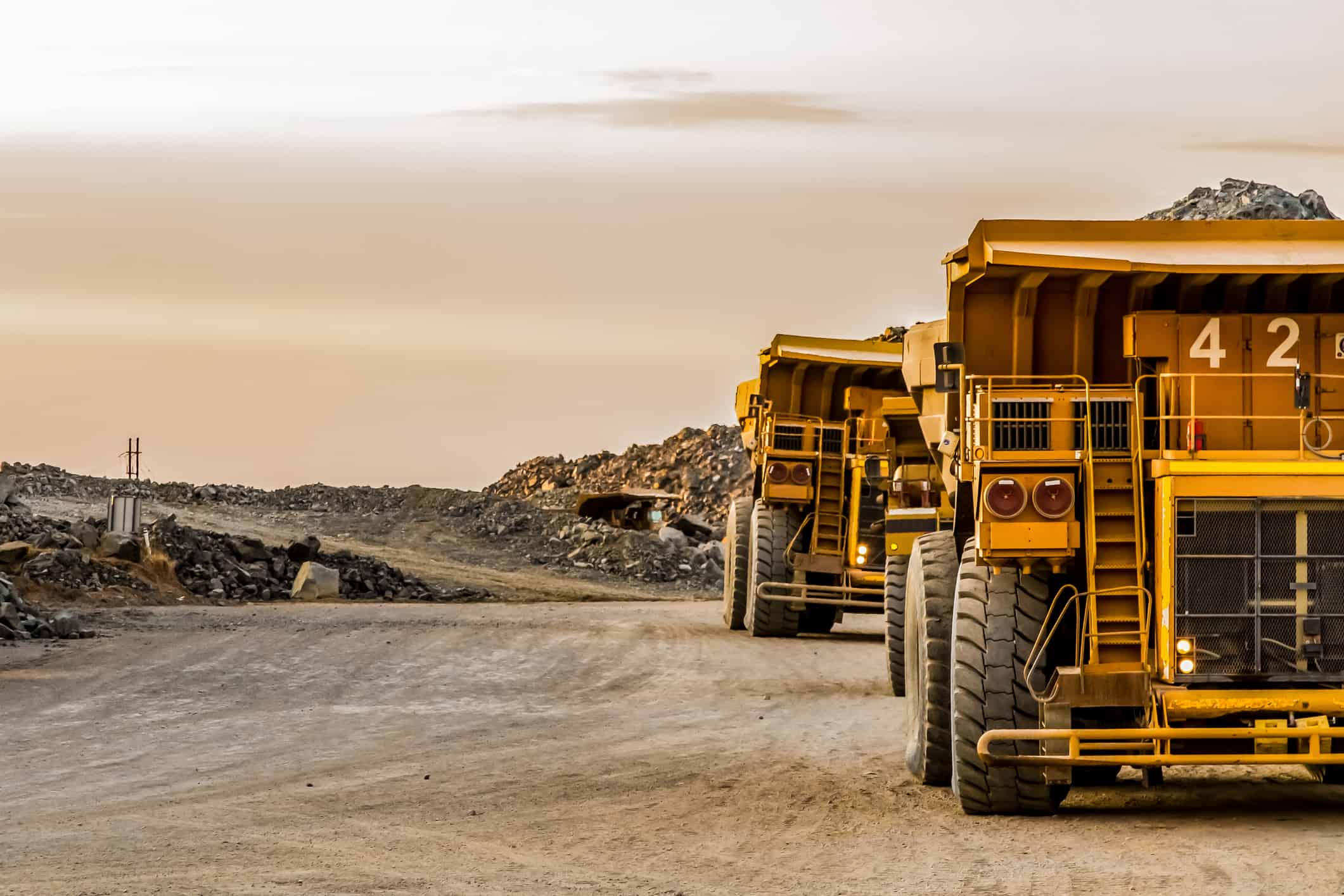
Carney wants $1 trillion invested. If even a respectable chunk of it eventually requires something large, yellow and capable of moving several tonnes of earth, Finning should be pleased.

Canada has spent plenty of time announcing enormous projects. The next trick is considerably harder. Actually building them.
Prime Minister Mark Carney wants to catalyse $1 trillion of investment over five years across energy, transportation, data, defence, and other major industries.
The Canada Investment Summit offered an early glimpse of what that could look like. Investors from nearly 30 countries managing more than $100 trillion in assets gathered in Toronto, while nearly $500 billion in investment and financing commitments emerged from the event.
For investors, the opportunity isn’t simply figuring out which $20 billion mine, pipeline, or data centre eventually gets approved. There’s another way to play a building boom. Sell everyone the equipment.
Source: Getty Images
Cutting red tape
Canada’s investment problem hasn’t necessarily been a lack of money or resources. It has been getting projects from announcement to construction without adding several birthdays along the way.
Carney’s new standard is “One project. One review. One year.”
The government also allows companies to immediately deduct a much larger share of new capital spending through its Productivity Mega Deduction. Meanwhile, major-project spending is being directed toward mines, critical minerals, pipelines, electricity infrastructure, data centres, roads, and ports.
That means a lot of dirt could need moving. Enter Finning International (TSX: FTT).
FTT
Finning is the world’s largest Caterpillar dealer. It sells, rents and services heavy equipment used across mining, construction, oil and gas, infrastructure, and power generation. In Western Canada alone, its customers range from miners and oil-sands operators to pipeline companies and construction businesses.
That’s precisely why I like it for this theme. Finning doesn’t need to predict whether copper, LNG, AI power infrastructure, or roads receive the most investment. A surprising number of these projects eventually require excavators, mining trucks, engines, or power systems.
And demand is already showing up. Finning’s second-quarter revenue jumped 20% year over year to a record $3.1 billion, while earnings per share climbed 21% to a record $1.22. Even more interesting is its equipment backlog. It remained at a record $3.8 billion, up 22% from the end of 2025, with management specifically pointing to strong orders in mining and power and energy.
AI addition
Finning isn’t merely waiting for bulldozers to arrive at new mines. Management has also highlighted opportunities supplying power-generation equipment to data centres. Its Canadian power and energy business has been growing strongly, while Finning is using more than a decade of data-centre experience from its U.K. operation to pursue Canadian customers.
Yet there is a catch. Finning shares recently traded around $95, leaving the stock at roughly 19 times forward earnings. That’s not dirt cheap anymore. The shares have already risen significantly in 2026 as investors warmed to the infrastructure and resource story.
Finning is also cyclical. If commodity prices collapse or Canada’s trillion-dollar building ambition gets stuck in another decade of reviews and consultations, equipment orders can disappear remarkably quickly.
Bottom line
Still, I’d rather own a company already reporting record revenue and backlog than one waiting for Canada’s investment boom to rescue the business.
Carney wants $1 trillion invested. If even a respectable chunk of it eventually requires something large, yellow and capable of moving several tonnes of earth, Finning should be pleased.