
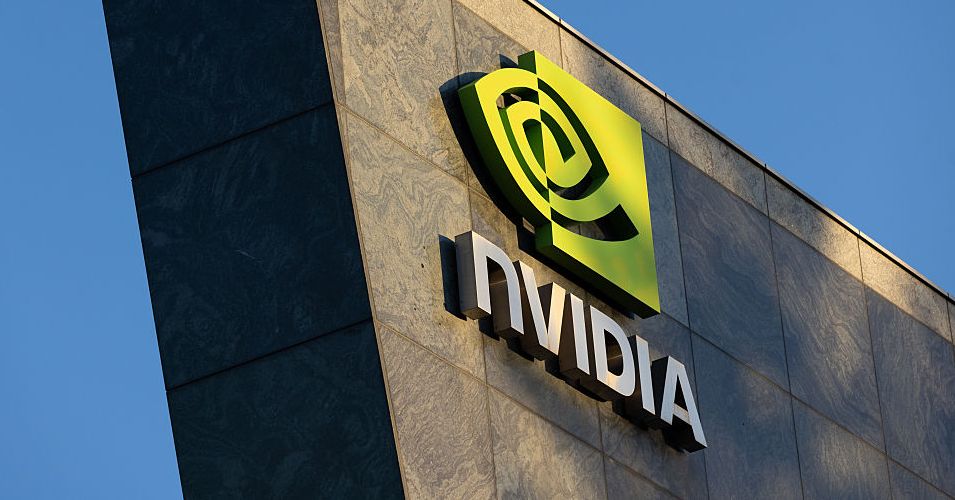
Interim Nvidia CEO Colette Kress made her first address to the staff on Wednesday and just minutes into the meeting told employees that they can expect pay raises and more equity in December, months ahead of schedule, according to remarks reviewed by WIRED.
“So I’m here to tell you, the best thing that we want to do is to take care of each and every single employee that is here and to make sure that you feel good about this company and you do not worry about your comp,” she said.
Questions about compensation were the most common among the 700 submitted ahead of the meeting, Kress said. She said the next-most common request was for transparency from the board.
Kress’ comments came during the first companywide meeting following the resignation of Jensen Huang as CEO last week. Huang had led the computer graphics chip maker since cofounding it 33 years ago, and his presentations during the quarterly town halls internally had become a much-anticipated and memorable spectacle for some of the company’s nearly 49,000 employees. Information rarely leaked from the meetings in the past.
But now Nvidia is facing an extraordinary leadership crisis. Huang resigned amid allegations of extramarital affairs, including potentially with a Chinese intelligence asset. Nvidia’s board chair Harvey Jones said on Tuesday that Huang disclosed “personal behavior” contrary to the company’s policies and norms and wouldn’t be invited back.
Thousands of employees have apparently lobbied for Huang’s reinstatement. Several well-known tech executives signed a public petition, with about 200,000 purported backers urging the same. Instead, the board is searching internally and externally for a replacement at one of the world’s most valuable companies and one of the biggest drivers of the generative AI boom.
Huang’s departures and a slew of government investigations into him and Nvidia have rattled investors. But on Tuesday, Nvidia reported better than expected financial results and forecast growing sales in the years to come. Shares were up about 5 percent on Wednesday.
One concern investors have expressed is whether Nvidia might see a brain drain of top talent, some of whom at this point are tied to Nvidia less for financial reasons and more for the mission that Huang constantly drove. Nvidia could also be perceived as a less desirable place for new and emerging talent to work with its leadership in flux, during an especially critical time for an organization that’s driving the AI boom.
On Tuesday’s third-quarter earnings call, an analyst from Bank of America Securities asked Kress directly about her “message” to Nvidia investors about talent retention, as well as the company’s overall durability and financial strategy through this major upheaval. Kress replied that “probably the most important thing” company leaders are thinking through right now is stabilizing its employee ranks.
“We are always thinking about our employees. Like every community out there, there are diverse opinions,” Kress said. “We will take care of our employees during this transition to make sure they are safe and make sure the work can be done in the current environment.”
In a brief question-and-answer session with Kress during the all-hands meeting Wednesday, Nvidia cofounder Chris Malachowsky addressed how the company could maintain its prized culture going forward.
He recalled how he, Huang, and other cofounders thought it was “nonsense” to put cultural values up on posters. Instead, they want it instilled in “the way you behave, the way you work together and the way you work” and he believes that will stand the test of time. “We’re going to be fine,” he said.