
The 2026 Tax-Free Savings Account (TFSA) annual limit is $7,000, but that headline number could understate what’s entirely available.
The cumulative TFSA room for anyone who was a Canadian resident over the age of 18 in 2009 and never contributed to the account stands at $109,000. Notably, any unused TFSA contribution room never expires and can be included in subsequent years.
Further, any capital withdrawn is added back to the TFSA starting January 1 of the following year.
Leveraging unused room carried forward from past years, a simple move available to couples, and the way tax-free compounding works over time, there are three legitimate ways a single year’s contribution can end up doing the work of two. Let’s see how.
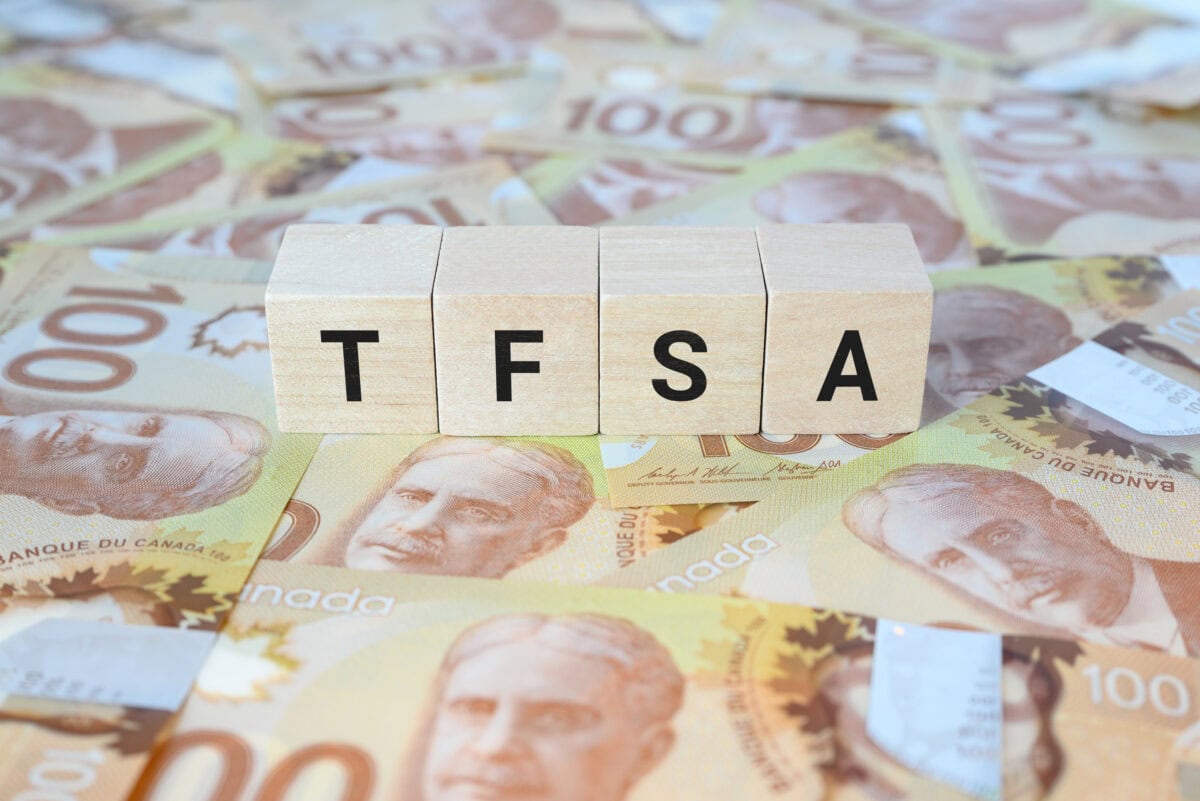
Source: Getty Images
Strategy 1: Contribute this year’s room and last year’s
Most Canadians haven’t maxed out their TFSA. Additionally, every dollar of room not used in a given year carries forward and is available indefinitely.
So, most Canadians will have more than $7,000 in unused TFSA contributions.
The practical move is to check the exact available room in your CRA My Account. Someone who skipped last year could allocate $14,000 to the TFSA this year, which is double the current annual limit.
However, contributing more than the actual available room (as opposed to unused room from a specific past year someone remembers incorrectly) triggers an overcontribution penalty.
Strategy 2: Double the household limit, not the paycheque
Unlike an RRSP (Registered Retirement Savings Plan), a TFSA has no spousal-account structure.
Each partner has their own TFSA and their own room, and there’s no attribution rule clawing the growth back to whoever provided the cash.
So you can transfer cash to your partner, who can invest it in their TFSA.
If one partner has more unused room than the other, gifting cash lets the household use contributions efficiently instead of leaving it stranded in the account of the partner with less cash on hand.
Strategy 3: Let the TFSA itself double the contribution
Another strategy to double your TFSA annual contribution is by owning quality dividend stocks in the registered account.
Royal Bank of Canada (TSX: RY) is a useful real-world illustration: a $10,000 position opened in October 2016 with dividends reinvested would have grown to roughly $44,900 by October 2026, a 348.8% total return.
RBC has raised its annual dividend from $0.37 per share in October 1997 to $7.04 per share in October 2026. A dividend reinvestment plan can help you double your TFSA balance over time. However, you need to let compounding work its magic.
Despite its stellar returns, Royal Bank of Canada still offers a tasty dividend yield of 2.6% in October 2026.
The growth story for RBC stock is far from over. Analysts forecast revenue to increase from $66.1 billion in fiscal 2025 (ended in October) to almost $80 billion in 2028. Over this period, adjusted earnings are projected to expand from $14.43 per share to $19.42 per share.
Bay Street also estimates the annual dividend to increase to $8.07 per share in fiscal 2028.
The Foolish takeaway
The $7,000 TFSA contribution room is just the starting point. With any unused room from past years, a spouse’s TFSA, and tax-free dividend compounding, a single year’s TFSA contribution has three legitimate paths to double over time.

The 2026 Tax-Free Savings Account (TFSA) annual limit is $7,000, but that headline number could understate what’s entirely available.
The cumulative TFSA room for anyone who was a Canadian resident over the age of 18 in 2009 and never contributed to the account stands at $109,000. Notably, any unused TFSA contribution room never expires and can be included in subsequent years.
Further, any capital withdrawn is added back to the TFSA starting January 1 of the following year.
Leveraging unused room carried forward from past years, a simple move available to couples, and the way tax-free compounding works over time, there are three legitimate ways a single year’s contribution can end up doing the work of two. Let’s see how.
Source: Getty Images
Strategy 1: Contribute this year’s room and last year’s
Most Canadians haven’t maxed out their TFSA. Additionally, every dollar of room not used in a given year carries forward and is available indefinitely.
So, most Canadians will have more than $7,000 in unused TFSA contributions.
The practical move is to check the exact available room in your CRA My Account. Someone who skipped last year could allocate $14,000 to the TFSA this year, which is double the current annual limit.
However, contributing more than the actual available room (as opposed to unused room from a specific past year someone remembers incorrectly) triggers an overcontribution penalty.
Strategy 2: Double the household limit, not the paycheque
Unlike an RRSP (Registered Retirement Savings Plan), a TFSA has no spousal-account structure.
Each partner has their own TFSA and their own room, and there’s no attribution rule clawing the growth back to whoever provided the cash.
So you can transfer cash to your partner, who can invest it in their TFSA.
If one partner has more unused room than the other, gifting cash lets the household use contributions efficiently instead of leaving it stranded in the account of the partner with less cash on hand.
Strategy 3: Let the TFSA itself double the contribution
Another strategy to double your TFSA annual contribution is by owning quality dividend stocks in the registered account.
Royal Bank of Canada (TSX: RY) is a useful real-world illustration: a $10,000 position opened in October 2016 with dividends reinvested would have grown to roughly $44,900 by October 2026, a 348.8% total return.
RBC has raised its annual dividend from $0.37 per share in October 1997 to $7.04 per share in October 2026. A dividend reinvestment plan can help you double your TFSA balance over time. However, you need to let compounding work its magic.
Despite its stellar returns, Royal Bank of Canada still offers a tasty dividend yield of 2.6% in October 2026.
The growth story for RBC stock is far from over. Analysts forecast revenue to increase from $66.1 billion in fiscal 2025 (ended in October) to almost $80 billion in 2028. Over this period, adjusted earnings are projected to expand from $14.43 per share to $19.42 per share.
Bay Street also estimates the annual dividend to increase to $8.07 per share in fiscal 2028.
The Foolish takeaway
The $7,000 TFSA contribution room is just the starting point. With any unused room from past years, a spouse’s TFSA, and tax-free dividend compounding, a single year’s TFSA contribution has three legitimate paths to double over time.