

3 min read2 hr
A Conservative-run council is lobbying the government to increase housing benefit, just as party leader Kemi Badenoch pledges to cut it.

Local Housing Allowance (LHA) limits how much Universal Credit is paid to private renters. It is meant to cover the cheapest 30 per cent of private sector rents in each area, with claimants whose rent is higher paying the shortfall themselves.
The Labour government has frozen LHA’s cash value for the last two years, resulting in a real-terms cut because actual rents have risen in that time.
Badenoch has pledged to fund greater defence spending by cutting benefits, including reducing housing benefit so that it covers the cheapest 10 per cent of local private rents – one in ten privately rented homes.
Pensioners would be exempt, but existing tenancies would be affected, with their LHA rates frozen in cash terms until they gradually fell in line with the 10th percentile.
A report tabled at a meeting of Enfield Council’s cabinet last week said: “The council continues to lobby the government to lift the temporary accommodation subsidy cap and the raising of LHA to the 30 per cent of the market on an ongoing basis”.
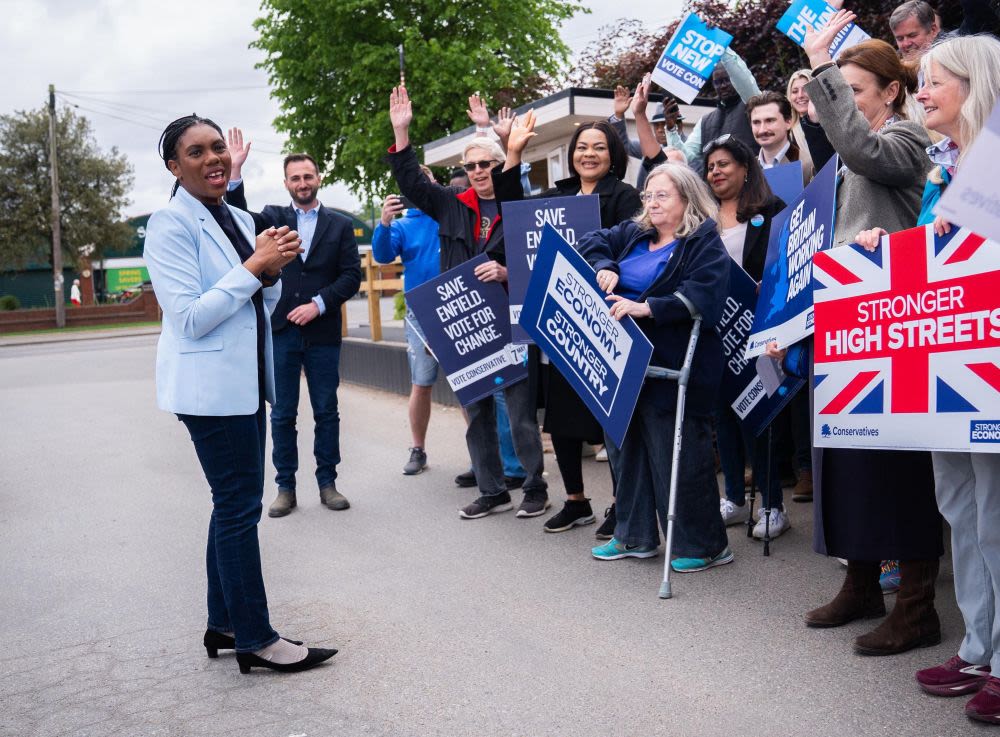
Enfield in North London has been in Tory minority control since the Conservatives ousted Labour in May.
The council’s newly approved homelessness and rough sleeping strategy said: “The average private sector rent in Enfield is substantially higher than LHA levels, creating additional affordability challenges for low-income households and increasing the risk of homelessness.”
It added that average rents in Enfield have risen by 12 per cent in the year leading up to June 2025, while “government benefits have not kept pace with these rising costs”.
Enfield Council declined to comment on Badenoch’s statement.
PoliticsHome has identified eight other Conservative-led councils that since the 2024 general election have flagged LHA cuts as a driver of housing unaffordability and homelessness: Hillingdon, Kensington and Chelsea, Harlow, Test Valley, Lichfield, North West Leicestershire, North Yorkshire, and East Hampshire.
Kensington and Chelsea council told PoliticsHome it supports ending the LHA freeze and restoring the link to the 30th percentile of local rents.
Last summer, a homelessness review from East Hampshire council found that the freeze has been “particularly challenging” for people under 35 who receive a single room rate, “and this is reflected in the number of homelessness approaches from this group”.
The two-year LHA freeze has meant that across England, on average it is now limited to the cheapest 12 per cent of local rents for shared accommodation, the 11th percentile of one-bed rents, the 12th percentile for two-bed homes, the 14th percentile for three-bed homes, and the 16th percentile for larger homes.
In some areas, LHA is now worth less than the 10th percentile of local rents that Badenoch wants to reduce it to, according to the government’s Valuation Office Agency.
A Conservative Party spokesperson denied that their plans would worsen homelessness, telling PoliticsHome: “Our policy applies only to new tenants, and even then, those who needed to move would simply have to live in a slightly cheaper house – they would not be homeless.”
They added that their proposals would “reduce uncertainty for families” by replacing “stop-start freezes” with guaranteed annual upratings to maintain the 10 per cent threshold, and include protections for existing LHA tenants.
A government spokesperson said: “We’re tackling the impact of rising rents and the housing shortage with our commitment to build 1.5m homes – including the biggest boost to social and affordable housing in a generation.
“We are also investing more than £1bn in homelessness services, launching a cross-government homelessness strategy, and investing a record £39 billion in affordable and social housing.
“LHA rates are reviewed annually, and future decisions on LHA will be taken in the context of the government’s welfare priorities and the fiscal context.”