
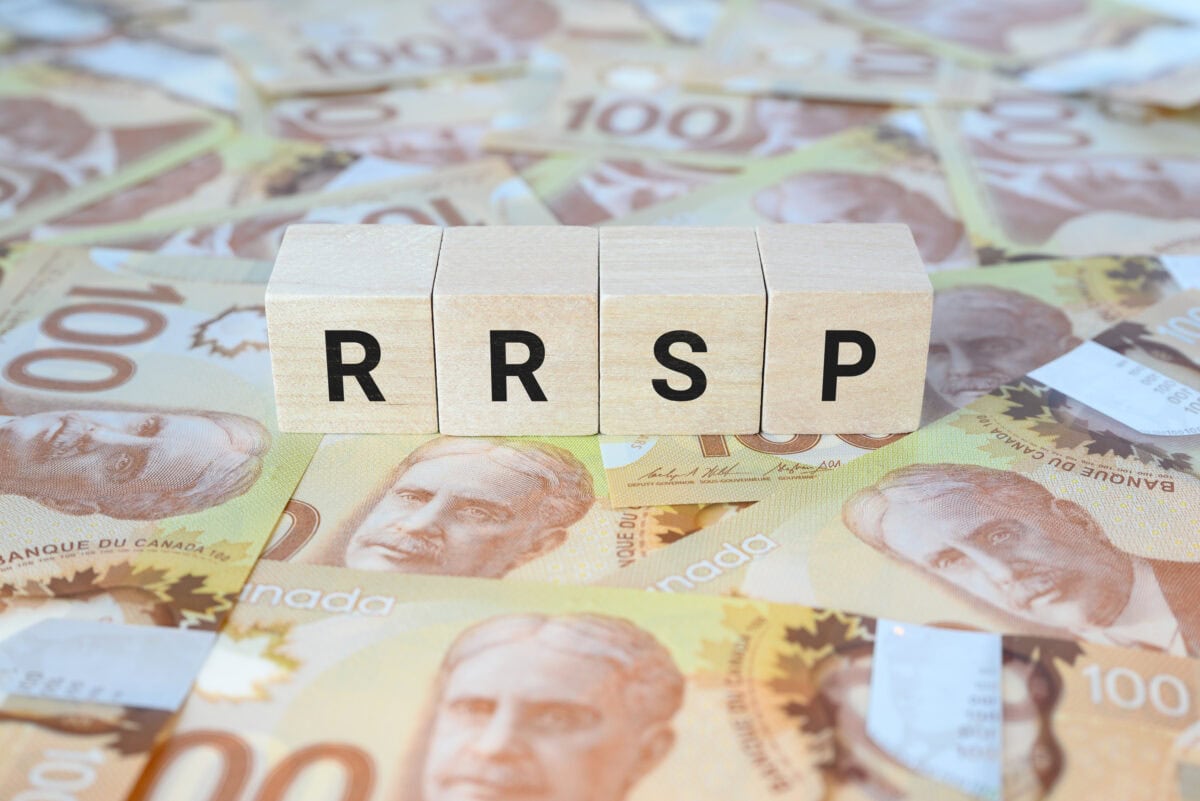
A million-dollar Registered Retirement Savings Plans (RRSPs) sounds like a retirement victory. However, then the government tells you to start emptying it.
RRSPs are designed to defer tax, not eliminate it. Contributions can create tax deductions, investments can compound tax-deferred, and withdrawals generally become taxable income.
That can create an odd problem for successful savers. The account gets so large that mandatory retirement withdrawals arrive alongside Canada Pension Plan (CPP) payments, Old Age Security (OAS), workplace pensions, and other income. That said, I’d start planning before 71.
Source: Getty Images
Watch the future withdrawal
An RRSP has to mature by December 31 of the year its owner turns 71. Many Canadians convert it to a Registered Retirement Income Fund (RRIF), where the investments can continue growing tax-deferred.
Minimum withdrawals begin the following year. At age 72, the standard RRIF minimum factor is 5.4%. So, consider a 60-year-old with $500,000. If that RRSP earned an illustrative 6% annually for 11 years without withdrawals, it would approach $949,000 by age 71.
A 5.4% minimum on that balance would be roughly $51,250. That’s taxable income before another pension enters the room. Of course, the 6% return is an illustration, not a forecast. But the tax problem is real.
Use the gap years
I’d identify the period between stopping work and starting every other source of retirement income. Someone retiring at 62, for example, may have several lower-income years before CPP, OAS, workplace pensions, and mandatory RRIF withdrawals all overlap.
Partial RRSP withdrawals during those years can intentionally create taxable income sooner. Yes, paying tax early sounds like the kind of retirement advice designed by the CRA. The goal is to potentially avoid paying more later.
The correct withdrawal depends on tax brackets, spouse income, benefits, future spending, and longevity. This is a place for personal tax modelling, not one magic percentage. After tax, cash that isn’t needed could move inside a TFSA when contribution room exists.
Keep the rest growing
I wouldn’t empty an RRSP simply because future taxes exist. Money that won’t be needed for years still requires growth. One company I’d consider for that long-term portion is Bank of Montreal (TSX: BMO).
BMO operates personal and commercial banking, wealth management, capital markets, and a large U.S. banking business. Third-quarter adjusted net income increased 19% year over year to $2.9 billion. Adjusted earnings per share rose 22% to $3.96.
Its Common Equity Tier 1 ratio, an important measure of bank capital, stood at 13%. That provides a useful cushion while BMO works through its U.S. strategy and continues returning capital to shareholders.
Considerations
At about $241 at writing, BMO traded around 15 times forward earnings. The $6.84 annualized dividend provides a yield around 2.8%. That’s not a huge retirement yield, but I’d buy BMO for a combination of income and long-term earnings growth among Canadian blue-chip stocks.
The risk remains its U.S. business. Integrating Bank of the West and improving U.S. profitability has taken longer than investors hoped. Credit losses could also rise if the economy weakens.
Bottom line
A large RRSP is a problem worth planning for. It is a financial strength, but managing it efficiently requires some foresight. It’s I’d model future RRIF withdrawals during my 60s, identify lower-income years, and consider deliberately drawing some RRSP money before mandatory withdrawals dictate the schedule.
Then I’d keep the remaining long-term assets invested. The goal isn’t entering retirement with the largest RRSP statement. It’s keeping the largest useful amount after tax.

A million-dollar Registered Retirement Savings Plans (RRSPs) sounds like a retirement victory. However, then the government tells you to start emptying it.
RRSPs are designed to defer tax, not eliminate it. Contributions can create tax deductions, investments can compound tax-deferred, and withdrawals generally become taxable income.
That can create an odd problem for successful savers. The account gets so large that mandatory retirement withdrawals arrive alongside Canada Pension Plan (CPP) payments, Old Age Security (OAS), workplace pensions, and other income. That said, I’d start planning before 71.
Source: Getty Images
Watch the future withdrawal
An RRSP has to mature by December 31 of the year its owner turns 71. Many Canadians convert it to a Registered Retirement Income Fund (RRIF), where the investments can continue growing tax-deferred.
Minimum withdrawals begin the following year. At age 72, the standard RRIF minimum factor is 5.4%. So, consider a 60-year-old with $500,000. If that RRSP earned an illustrative 6% annually for 11 years without withdrawals, it would approach $949,000 by age 71.
A 5.4% minimum on that balance would be roughly $51,250. That’s taxable income before another pension enters the room. Of course, the 6% return is an illustration, not a forecast. But the tax problem is real.
Use the gap years
I’d identify the period between stopping work and starting every other source of retirement income. Someone retiring at 62, for example, may have several lower-income years before CPP, OAS, workplace pensions, and mandatory RRIF withdrawals all overlap.
Partial RRSP withdrawals during those years can intentionally create taxable income sooner. Yes, paying tax early sounds like the kind of retirement advice designed by the CRA. The goal is to potentially avoid paying more later.
The correct withdrawal depends on tax brackets, spouse income, benefits, future spending, and longevity. This is a place for personal tax modelling, not one magic percentage. After tax, cash that isn’t needed could move inside a TFSA when contribution room exists.
Keep the rest growing
I wouldn’t empty an RRSP simply because future taxes exist. Money that won’t be needed for years still requires growth. One company I’d consider for that long-term portion is Bank of Montreal (TSX: BMO).
BMO operates personal and commercial banking, wealth management, capital markets, and a large U.S. banking business. Third-quarter adjusted net income increased 19% year over year to $2.9 billion. Adjusted earnings per share rose 22% to $3.96.
Its Common Equity Tier 1 ratio, an important measure of bank capital, stood at 13%. That provides a useful cushion while BMO works through its U.S. strategy and continues returning capital to shareholders.
Considerations
At about $241 at writing, BMO traded around 15 times forward earnings. The $6.84 annualized dividend provides a yield around 2.8%. That’s not a huge retirement yield, but I’d buy BMO for a combination of income and long-term earnings growth among Canadian blue-chip stocks.
The risk remains its U.S. business. Integrating Bank of the West and improving U.S. profitability has taken longer than investors hoped. Credit losses could also rise if the economy weakens.
Bottom line
A large RRSP is a problem worth planning for. It is a financial strength, but managing it efficiently requires some foresight. It’s I’d model future RRIF withdrawals during my 60s, identify lower-income years, and consider deliberately drawing some RRSP money before mandatory withdrawals dictate the schedule.
Then I’d keep the remaining long-term assets invested. The goal isn’t entering retirement with the largest RRSP statement. It’s keeping the largest useful amount after tax.